Insulin Dynamics and Abdominal Adiposity
Understanding insulin resistance and hyperinsulinaemia's role in central fat storage patterns.
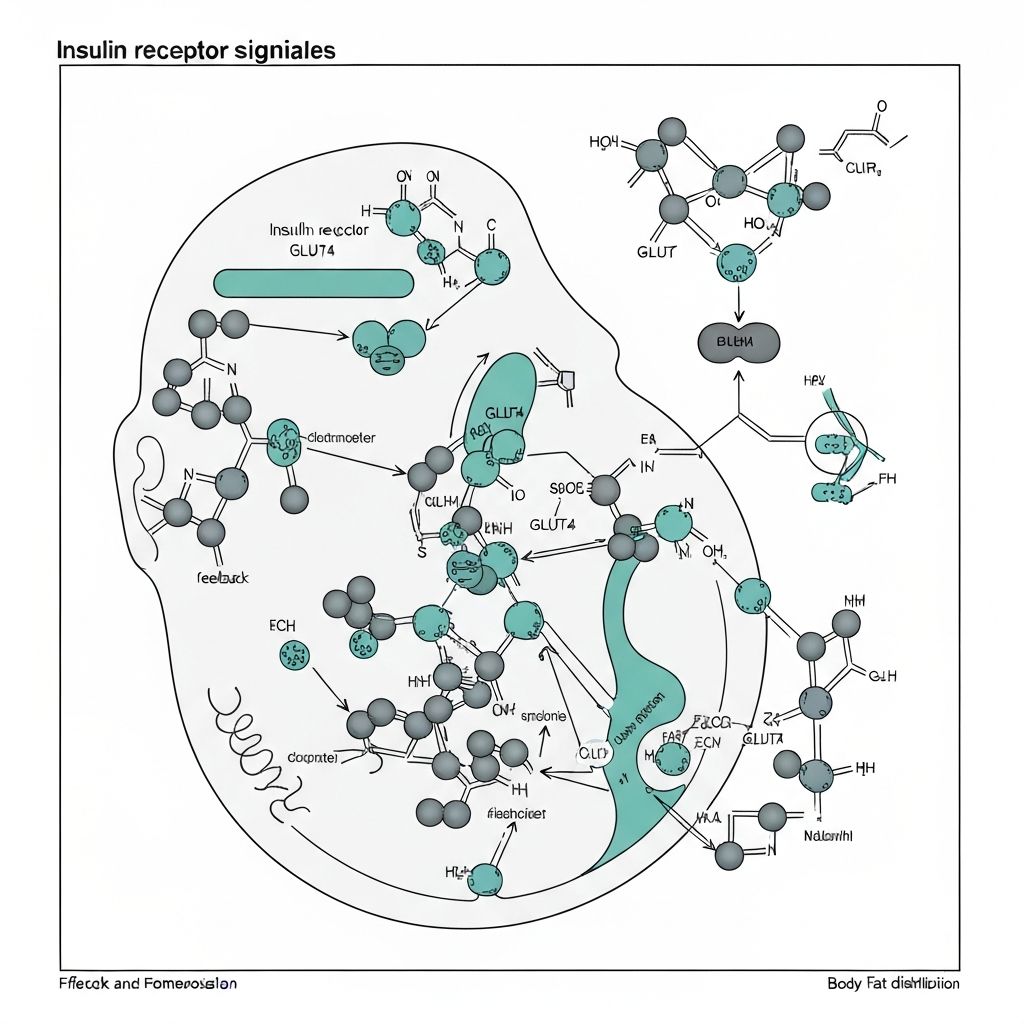
Insulin Physiology and Glucose Homeostasis
Insulin represents a critical anabolic hormone produced by pancreatic beta cells in response to elevated blood glucose concentrations. Following carbohydrate consumption, glucose absorption elevates plasma glucose levels, triggering insulin secretion. Insulin acts on tissues throughout the body to facilitate glucose uptake, promote anabolic (building) processes, and suppress catabolic (breaking down) processes.
In healthy glucose homeostasis, insulin secretion and tissue insulin sensitivity maintain blood glucose within a narrow physiological range despite varying dietary intake and activity patterns. However, in many individuals, this system becomes dysregulated, producing chronic hyperinsulinaemia and reduced insulin sensitivity—conditions that profoundly influence adipose tissue accumulation and distribution.
Insulin Resistance and Metabolic Dysfunction
Insulin resistance reflects reduced responsiveness of target tissues (muscle, liver, adipose tissue) to insulin signaling. In resistance states, tissues fail to adequately respond to normal insulin concentrations, requiring the pancreas to secrete increasingly higher amounts of insulin to maintain glucose homeostasis. This compensatory hyperinsulinaemia persists as long as beta cells can increase production.
The mechanisms underlying insulin resistance are complex and involve multiple pathways including:
- Impaired insulin receptor signaling and post-receptor defects
- Reduced GLUT4 glucose transporter translocation to cell membranes
- Elevated circulating free fatty acids interfering with glucose metabolism
- Chronic low-grade inflammation impairing insulin signaling cascades
- Mitochondrial dysfunction reducing cellular energy metabolism
Preferential Central Fat Storage Under Hyperinsulinaemia
Hyperinsulinaemia promotes central adiposity through multiple interconnected mechanisms. First, elevated insulin concentrations directly enhance lipogenic gene expression (genes involved in fat synthesis) specifically in visceral adipose tissue. Insulin serves as an anabolic signal, promoting the conversion of dietary carbohydrates and amino acids into stored triglycerides.
Hepatic Metabolism and Portal Delivery
Elevated insulin concentrations impair hepatic fatty acid oxidation while promoting hepatic triglyceride synthesis. This metabolic shift toward hepatic lipid storage reflects direct insulin signaling effects on liver enzymes. Simultaneously, insulin suppresses hepatic glucose output, but under hyperinsulinaemic conditions, compensatory mechanisms can override this, producing elevated circulating free fatty acids.
These free fatty acids, delivered to visceral adipose tissue via the portal circulation, provide substrate for preferential visceral fat storage. The combination of enhanced visceral lipogenic capacity (from insulin signaling) and elevated substrate availability creates a particularly favorable environment for central adiposity accumulation.
Suppression of Adipose Tissue Lipolysis
Insulin is fundamentally anti-lipolytic—it suppresses the breakdown of stored fat and the release of free fatty acids from adipose tissue. Under hyperinsulinaemic conditions, this suppressive effect intensifies, locking fatty acids into adipose tissue depots and preventing their mobilization for energy. This metabolic trap particularly affects visceral fat, which demonstrates greater insulin sensitivity for this anti-lipolytic effect.
Impaired Satiety Signaling
Insulin resistance frequently accompanies leptin resistance—reduced responsiveness to the satiety hormone leptin. Elevated leptin concentrations in obesity fail to signal appropriate satiety, contributing to hyperphagia (excessive eating). This behavioral component compounds the metabolic effects of hyperinsulinaemia in promoting continued energy intake and central fat accumulation.
Observational Evidence and Prospective Associations
Large population studies consistently demonstrate associations between fasting insulin concentrations, HOMA-IR scores (measuring insulin resistance), and abdominal adiposity measures. These relationships persist across diverse demographic groups and remain significant even after adjustment for total body fatness, suggesting a specific influence on fat distribution rather than obesity per se.
Intervention studies examining various dietary patterns demonstrate that approaches producing favorable changes in insulin sensitivity associate with reduced central adiposity more prominently than approaches that do not improve insulin sensitivity, despite similar total weight loss. This pattern further suggests that insulin dynamics specifically influence abdominal fat accumulation.
Dietary Factors and Insulin Dynamics
Dietary composition influences insulin responses independently of total caloric intake. High-glycemic-index carbohydrates produce rapid glucose and insulin spikes, while low-glycemic alternatives produce more gradual responses. Similarly, high refined carbohydrate intake, particularly added sugars, produces more pronounced hyperinsulinaemia than whole-grain carbohydrates with equivalent calories.
Observational associations between high added sugar and refined carbohydrate consumption and central adiposity may reflect partly insulin-mediated mechanisms. However, multiple other factors including energy balance, physical activity, and individual genetic predisposition also significantly influence these relationships.
Metabolic Recovery with Improved Insulin Sensitivity
Interventions demonstrating improved insulin sensitivity have been associated with favorable changes in central adiposity and visceral fat reduction. These observations suggest that enhanced insulin signaling allows more normal metabolic regulation of fat partitioning. However, individual responses vary substantially, and improvements in insulin sensitivity do not uniformly or completely reverse prior adiposity.
Educational Note
This article explains associations between insulin resistance and abdominal adiposity based on physiological mechanisms and observational research. Individual insulin sensitivity varies substantially based on genetic factors, prior health history, physical fitness, and numerous other variables. This information is educational only and does not constitute medical or nutritional guidance.